Skip to Content

Active Ingredients

The power of skincare lies in choosing the right active ingredients & supplements—pure, precise and proven for real results.


VIEW THE FULL DICTIONARY HERE​


Active Ingredients you need to know about

Retinoids

Vitamin A derivatives that speed up cell renewal, smooth fine lines and fade pigmentation. They boost collagen production for firmer, healthier skin.  ​​​ 

 Read More

Vitamin C

Vitamin C boosts collagen synthesis, brightens skin tone and protects against oxidative damage for a firmer, more even complexion.  

Read More

Peptides

Short chains of amino acids that signal your skin to repair, renew and produce more collagen. They help smooth fine lines and improve firmness over time. ​​ 

Read More

Hyaluronic Acid (HA)

A powerful hydrator that binds up to 1,000 times its weight in water, plumping the skin from within. It restores moisture, smooths fine lines and boosts radiance.​​  

Read More

Growth Factors

Naturally occurring proteins that stimulate skin repair and regeneration. They boost collagen and elastin production, helping to firm, smooth and restore youthful skin. ​  

Read More

Niacinamide (Vitamin B3)

A multitasking skincare ingredient that strengthens the skin barrier, reduces redness and balances oil. It also minimises pores, evens tone and improves texture. ​​  

Read More

Ceramides

Ceramides are the lipids that keep your skin barrier strong, smooth, and protected. They lock in moisture while shielding your skin from irritation and dryness.

Read More

Active Ingredients Walkthrough

Retinoids

  Go back to Index


Benefits of Retinoids:
  • Gold standard for anti-ageing 
  • Increase cell turnover, stimulates collagen & elastin production
  • Reverse signs of ageing
  • Reduce fine lines & wrinkles
  • Improve Pigmentation, post-acne scaring, sunspots.
  • Improve Acne by unclogging pores & regulating oil production .
  • Strengthens skin barrier when used long-term
Types of Retinoids:
Retinoic Acid (Tretinoin, Adapalene, Tazarotene)
  • Most potent - directly active and no conversion required.
  • Only available on prescription.
  • Fast results on wrinkles and acne, but often causes skin irritations, dryness and peeling
  • Products available are:
    • Retin A (Tretinoin cream/gel → only on prescription)
    • Differen (Adapalene → only on prescription)
Retinaldehyde (Retinal)
  • One step away from retinoic acid → stronger than Retinol → gentler than Tretinoin.
  • Very effective, but irritates the skin.
  • Available in in some advanced skincare ranges, however it still needs to convert from Retinal to Retinoic Acid → and then only binds to the skin. 
Retinol
  • Needs two conversions to work - Retinol → Retinal → Retinoic Acid, then it can only bind to the skin receptors.
  • Common in skincare, effective but less potent.
  • Causes irritation at higher percentages
Retinyl Esters (Palmitate, Acetate, Propionate)
  • Weakest form, needs multiple conversions to eventually bind to the skin receptors, in order to actually work.
  • Best for beginners or very sensitive skins, it is very gentle, minimal irritation, but the results are also impaired in relation to other types.
New-Gen Derivatives 
(HPR, Granactive Retinoid, Retinyl Retinoate)
  • Designed for stability, quick penetration & low irritation.
  • 8x more stable than retinol
  • Can bind directly with the skin receptor → start to work immediately!


Vitamin C

  Go back to Index


Benefits of Vitamin C:
  • Powerful Anti-oxidant- protect against free radical damage.
  • Brightens skin- Improve Radiance.
  • Great for Pigmentation.
  • Boost Collagen Synthesis- firming.
  • Stimulate production of natural moisturizing factors- allows the skin to better absorb moisture from the body / Keeps hydrated
  • Significant improvement on skin Texture + overall Radiance
Types of Vitamin C:
L-Ascorbic Acid (LAA)
  • Gold standard and most pure form, most researched form.
  • Powerful anti-oxidant and strongest results for collagen formation & fades pigmentation.
  • This molecule is unstable, can irritate sensitive skin.
  • This molecule is directly active, penetrates the epidermis when formulated at correct pH, but oxidizes quickly.
Sodium Ascorbyl Phosphate (SAP)
  • Stable, water-soluble, gentle.
  • Antioxidant + antimicrobial → suitable for acne prone skin.
  • Less potent collagen stimulator than LAA.
  • Converts slowly to active LAA in the skin. 
  • This molecule is milder with lower irritation risks.
Magnesium Ascorbyl Phosphate (MAP)
  • Very stable molecule, water-soluble with gentle brightening effect.
  • Less effective for collagen stimulation than LAA, but often used in creams and lotions. 
  • This molecule converts to active LAA gradually, ideal for sensitive skin or daily use.
Ascorbyl Glucoside (AA-2G)
  • Vit C bound to glucose, but a very Stable molecule.
  • Slow-releases active LAA molecule that is good for maintenance of the skin.
  • Less potent, mild and steady, but good for daily and long-term use.
Tetrahexyldecyl Ascorbate (THD / VC-IP)
  • Oil-soluble molecule that penetrates deeper and very stable at lower concentrations between 2-7%
  • Expensive and you will find this molecule in high end formulations.
  • Potent anti-ageing, brightening and support collagen formation with low risks of irritation on the skin.
Ascorbyl Tetraisopalmitate (ATIP)
  • Another Oil-soluble molecule, very stable and gentle. 
  • Potent anti-ageing, brightening and support collagen formation with low risks of irritation on the skin.
  • This molecule slowly converts in the skin, but is consistent results over time.
  • Popular in professional high-end skincare.
3-O-Ethyl Ascorbic Acid (EAC)
  • Modified LAA, Stable, water & oil-soluble.
  • Good balance of potency, stability and tolerability → widely used in medical-grade serums.
Ascorbyl Palmitate
  • Fat-soluble ester, more stable molecule, but the weakest form of Vit C
  • Gentle and often used in creams as supplemental anti-oxidant.
  • Less brightening effect & Collagen boosting properties.


Peptides

  Go back to Index


Benefits of Peptides:
  • Signal Fibroblast to produce more Collagen & Elastin production.
  • Improve Firmness and Reduce fine lines. 
  • Improve skin healing and skin repair.
  • Strenthen the skin barrier.
  • Calm inflammation and support hydration.
Types of Peptides:
Signal Peptides
  • Signaling peptides Stimulate collagen, elastin & skin the skins matrix.
  • This peptides Improve firmness, fine lines and skin texture.
  • Examples: Matrixyl®, Matrixyl® 3000, Epitensive™.
  • Mechanism: These peptides bind to the skin receptors and increase fibroblast extracellular matrix synthesis which deliver firmer, smoother skin over time
Carrier Peptides
  • Carrier peptides transport essential trace minerals like copper into the skin that is needed for collagen synthesis and repair/ wound healing.
  • Support elasticity, healing & resilience.
  • Example: Copper Tripeptide-1 (GHK-Cu). 
Neurotransmitter-Inhibiting Peptides
  • “Botox-like” peptides that relax facial micro-contractions and softens expression lines.
  • It blocks acetylcholine release at neuromuscular junctions and reduce muscle contractions for smoother lines
  • Examples: Argireline®, Syn®-Ake.
Enzyme-Inhibiting Peptides
  • These peptides prevent collagen & elastin breakdown. by inhibiting matrix metalloproteinases (MMP's).
  • It help preserve firmness, structure and skin architecture by protecting the extracellular matrix.
  • Examples: Soy & rice peptides.
Antimicrobial / Barrier Peptides
  • These peptides mimic the skin’s natural defense system, protect microbiome and aid wound healing.
  • It also strenthens the barrier and prevent infections.
  • These peptides emerging in medical grade skincare and are often used in post-procedure or barrier support products.Most potent, works directly, only available with a prescription.


Growth Factors

  Go back to Index


Benefits of Growth Factors:
  • Mimic the body's natural signaling molecules to Stimulate Fibroblast activity and Wound Healing pathways.
  • Promote Rejuvenation & Skin Repair at cellular level.
  • Stimulate fibroblast for collagen, elastin & Hyaluronic acid production.
  • Improve skin thickness, firmness and resillience.
  • Improve the appearance of wrinkles and scars.
Types of Growth Factors:
Epidermal Growth Factor (EGF)
  • EGF Stimulates skin repair, hydration & collagen by stimulating kerarinocytes and fibroblast cells. 
  • It binds to the EGF receptors on keratinocytes/fibroblasts, activates cell division and matricx production for faster healing and stronger skin barrier.
  • Most commonly found in skincare.
  • Example: Epitensive™ (bioengineered EGF-mimicking peptide).
Fibroblast Growth Factors (FGFs)
  • FGF's directly stimulates the fibroblasts to produce collagen, elastin & HA.
  • It is Key for dermal rejuvenation, Improve firmness and elasticity and leave the skin plumpy.
  • Often found in post-precedure healing products.
Transforming Growth Factor (TGF-β)
  • TGF's function is to regulate collagen synthesis and regulates extracellular matrix remodeling.
  • It Improves firmness and reduce wrinkle by strenthening the dermal structure.
Vascular Endothelial Growth Factor (VEGF)
  • VEGF's Stimulates angiogenesis (new capillaries formation) and improve better oxygen & nutrient delivery
  • It Supports healing and skin vitality.
Platelet-Derived Growth Factor (PDGF)
  • PDGF's Promotes wound healing, angiogenesis & tissue repair. 
  • It accelerates recovery after injury or aesthetic procedures.
  • Naturally present in PRP (platelet-rich plasma).
Insulin-like Growth Factor (IGF-1)
  • IGF-1 Supports cell growth, tissue repair and differentiation and is more relevant for healing than anti-ageing.
  • It enhances cell turnover on a damaged skin.


Hyaluronic Acid (HA)

  Go back to Index


Benefits of Hyaluronic (HA):
  • Hydrates / Powerfull humectant that holds up to 1000x its weight in water.
  • Key molecule improving Elasticity by stimulating pro-collagen type I - firming properties - improve suppleness.
  • Plumping, Improve Texture + smooths the skin.
  • Excellent moisturizing properties.
Types of Hyaluronic Acid (HA):
High Molecular Weight HA
  • Responsible for Surface hydration with a larger molecule.
  • The benefits are calming & smoothing with reduced irritation on the skin beacuse it creates a water-rich film on the stratum corneum.
Low Molecular Weight HA 
  • A smaller size molecule which penetrate into the epidermis for Deeper hydration, elasticity and anti-ageing with longer lasting plumpness and bounce in the skin.
Oligo / Ultra-Low Molecular Weight HA 
  • Very small fragments that can reach the Dermis and stimulates the fibroblasts cells, boosts collagen/HA and has strong anti-ageing effects. 
  • At high levels, it may cause skin irritation due to inflammatory signaling.
Sodium Hyaluronate 
  • The most common form in skincare,its more stable & affordable and effective in multiple weights.

Cross-Linked HA forms a “3D network”for slow-release, long-lasting hydration.

Hydrolyzed HA:
  • It is HA broken down in smaller fragments for better penetration, less film-forming. 
  • Smaller fragments penetrate into the upper epidermis, increase hydration balance inside out.
Acetylated HA:
  • It is a modified form with better &  stronger adhesion for lasting comfort,long-lasting hydration and ideal for dry/sensitive skin types.
HA Precursors (e.g., NAG)  
  • NAG is not HA itself, but stimulate skin’s own HA production. 
  • This is responsible for long-term anti-ageing effects and barrier repair.

Niacinamide (Vit B3)

  Go back to Index


Benefits of Niacinamide (Vit B3):
  • Strenthens skin barrier by boosting ceramide production.
  • Provide anti-oxidants & reduces inflammation - redness & sensitivity.
  • Improve uneven skin tone. 
  • Enhances tolerance of stronger actives like retinoids.
  • Minimize pores, regulate sebum production - support acne and refine enlarged pores.
Recommended Strengths:
  • 2% → Sensitive skin, hydration, redness.
  • 4–5% → Oil control, acne, pore appearance.
  • 5% → Brightening, pigmentation, post-acne marks.
  • 10% → Stronger results for texture & pigmentation (higher irritation risk).
  • >10% → No added benefit, may cause flushing.

Ceramides

  Go back to Index
Benefits of Ceramides:
  • Reinforce the skin barrier, locking in moisture and preventing transepidermal water loss (TEWL).
  • Restore and replenish essential lipids in dry, sensitive, or compromised skin.
  • Improve hydration and plumpness by sealing in water.
  • Reduce irritation, sensitivity, redness and inflammation.
  • Support recovery after aesthetic treatments such as peels, microneedling, or laser.
  • Enhance performance of other actives (retinoids, exfoliants) by creating a balanced environment.
  • Assist in managing eczema, dermatitis and barrier-compromised conditions.
  • Provide long-term anti-ageing support by protecting against environmental damage.
Recommended Strengths:
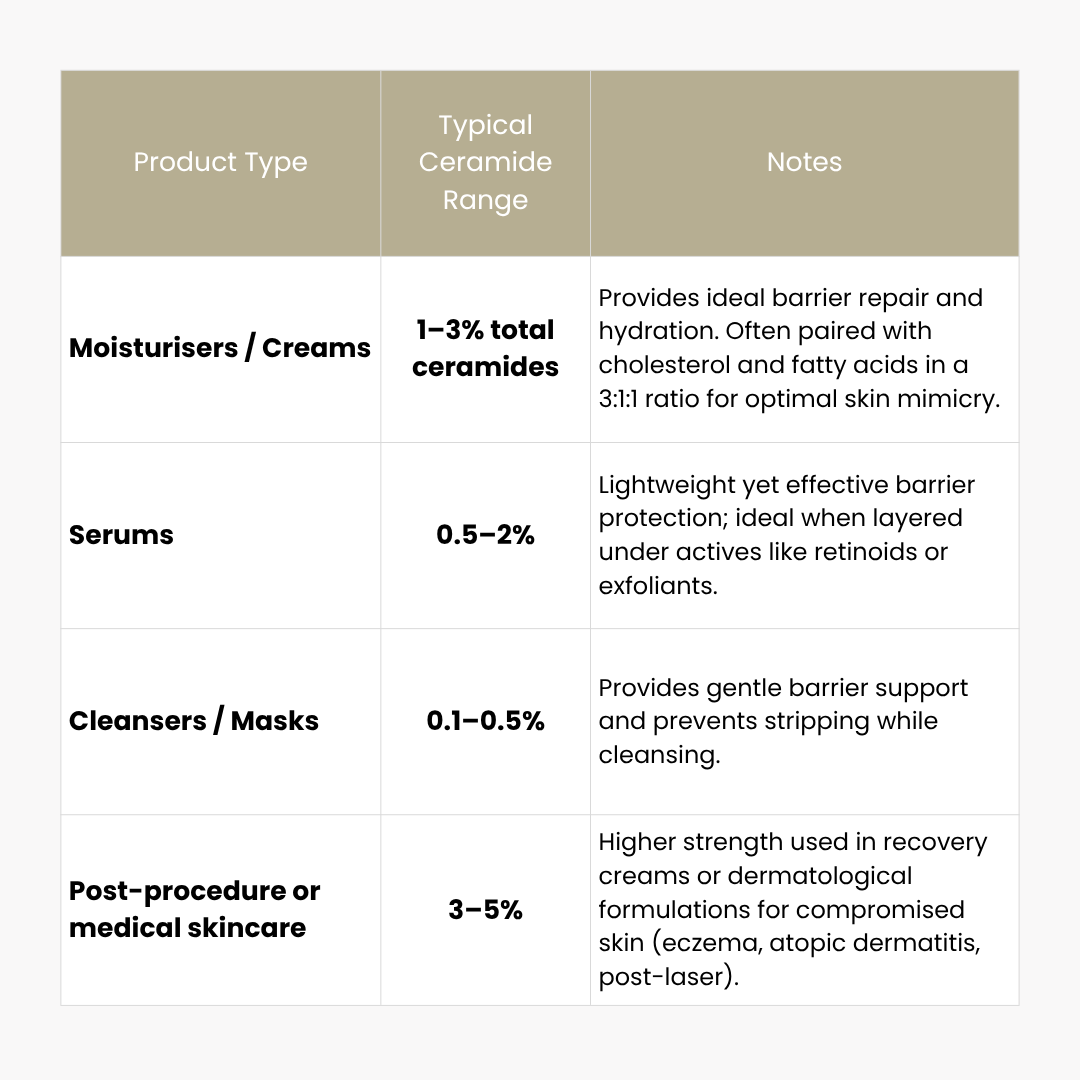
  • Ceramides are typically used in concentrations between 0.5% and 5% in cosmetic and dermatological formulations, depending on the product type and the combination with other barrier lipids (cholesterol, fatty acids).
  • Because ceramides are structural lipids, their effectiveness relies not only on concentration but also on the ratio and balance between different ceramide types and complementary lipids.
The Absolute Importance of Correct Active Ingredients in Skincare, Collagen & Supplements


When it comes to achieving visible, lasting results in skin health and overall wellness, not all active ingredients are created equal. The beauty industry is filled with products that promise glowing skin, improved elasticity and youthful vitality — but very few explain the science behind why some products deliver results while others fall short. The truth lies in three essential factors: the purity of the ingredient, the form it’s delivered in and the correct concentration and combination.


What most consumers don’t realize is that there are often multiple forms of the same active ingredient — each with its own strengths, weaknesses, absorption rates and results. Take Vitamin C for example. There are 8–10 different forms available in skincare and supplements, ranging from L-Ascorbic Acid to Tetrahexyldecyl Ascorbate. Each form has its own unique profile: some are highly potent but unstable, others are gentler and more stable and some penetrate deeper for long-term results. The same applies to other powerhouse actives like Vitamin A, Collagen peptides, Hyaluronic Acid and Niacinamide — all of which require careful formulation to unlock their full potential.


The key is not just having actives on the label — it’s about having the right form, in the right strength, in the right synergy. Pure, clinically backed ingredients in expertly designed concentrations work together to target the skin on a cellular level, stimulating fibroblasts, supporting collagen production, protecting against oxidative stress and nourishing from the inside out.


At SKINITY by doc G we are passionate about transparency, education and results. Every product in this category is formulated with the purest active ingredients — selected for their proven efficacy and combined in a way that maximizes their benefits while minimizing irritation. By understanding the science of actives, you can make empowered choices that bring you closer to healthier skin, stronger collagen support and true wellness from within.